
Small business insurance for auto repair shops can cost anywhere from about $50 per month for basic liability coverage to $450+ per month for a broader insurance package that includes multiple policies. Your actual price depends on your location, shop size, payroll, revenue, services offered, number of employees, business vehicles, customer vehicles in your care, coverage limits, deductibles, and claims history.
At Life My Savings, we’ll break down real cost benchmarks, what coverage an auto repair shop usually needs, why garagekeepers insurance matters, and how to lower your premium without leaving your business exposed.
Quick answer: how much does auto repair shop insurance cost?
Most auto repair shops need more than one policy. A basic general liability policy may be affordable, but it usually does not cover every risk a repair shop faces.
| Coverage type | Estimated monthly cost | Estimated annual cost | What it usually covers |
|---|---|---|---|
| General liability | $50–$155 | $600–$1,860 | Customer injury, third-party property damage, lawsuits |
| Garagekeepers insurance | $38–$210+ | $450–$2,500+ | Customer vehicles in your care, custody, or control |
| Business owner’s policy (BOP) | $145–$225 | $1,740–$2,700 | General liability plus business property coverage |
| Workers’ compensation | $148–$155+ | $1,775–$1,860+ | Employee injuries, medical bills, lost wages |
| Commercial auto | $75–$155+ | $900–$1,850+ | Business-owned vehicles, delivery, service vehicles |
| Professional liability / E&O | $80+ | $980+ | Professional mistakes, faulty advice, service errors |
| Broader insurance package | $450–$1,100+ | $5,400–$13,200+ | Multiple policies for larger or higher-risk shops |
Methodology note: These ranges combine public 2025–2026 insurance marketplace estimates and cost studies from sources such as MoneyGeek, Insureon, TechInsurance, Pogo, HowMuch, and Insuranceopedia. Some sources report median policy costs from quote applicants, while others estimate broader insurance packages. Your real quote may be higher or lower depending on your shop’s risk profile. Older business owners who also want broader personal vehicle protection may want to review best full coverage car insurance for seniors in 2026 before relying on minimum limits.
Why auto repair shop insurance estimates vary so much
You may see one source estimate auto repair shop insurance at less than $100 per month, while another estimates several hundred dollars per month. That usually means they are measuring different coverage packages.
A low estimate may refer only to general liability. A higher estimate may include workers’ compensation, a BOP, garagekeepers coverage, commercial auto, professional liability, umbrella coverage, or business interruption coverage. A one-person mobile mechanic will not pay the same as a multi-bay repair shop with employees, lifts, customer vehicles stored overnight, and company-owned vehicles.
When comparing estimates, ask:
- Is the estimate for one policy or a bundle?
- Does it include garagekeepers coverage?
- Does it include workers’ compensation?
- Does it include commercial auto?
- Does it include tools, lifts, equipment, and business property?
- What business size, payroll, revenue, limits, and deductibles are assumed?
The better question is not only “How much is insurance?” It is “What coverage stack does my shop actually need?”

What insurance does an auto repair shop need?
Auto repair shops face several risks at once: customer injuries, damage to customer vehicles, employee injuries, tool and equipment losses, fire, theft, test drives, service disputes, and business interruption.
| Coverage | Why it matters for auto repair shops |
|---|---|
| General liability | Helps cover third-party bodily injury, third-party property damage, and lawsuits |
| Commercial property | Helps protect buildings, tools, lifts, equipment, parts, furniture, and inventory |
| Business owner’s policy | Bundles general liability and commercial property for eligible small businesses |
| Garagekeepers insurance | Helps cover customer vehicles while they are in your care |
| Garage liability | Helps cover certain liability risks tied to garage operations |
| Workers’ compensation | Covers employee injuries and lost wages; often required if you have employees |
| Commercial auto | Covers business-owned vehicles, service vehicles, parts delivery, or shop vehicles |
| Professional liability / E&O | Helps with claims involving professional errors, faulty recommendations, or service mistakes |
| Business interruption | Helps replace lost income after a covered shutdown |
| Cyber liability | Helps if customer data, payment systems, or digital shop records are compromised |
| Umbrella insurance | Adds extra liability limits above underlying policies |
A small shop may not need every policy on day one. But most repair shops should look beyond general liability alone.
Garagekeepers vs. general liability: the gap many shops miss
This is one of the most important insurance gaps for auto repair shops.
General liability may help if a customer slips in your lobby or your business damages someone else’s property. But it may not cover a customer’s vehicle while that vehicle is in your shop’s care, custody, or control.
That is where garagekeepers insurance comes in. Garagekeepers coverage is designed to help protect customer vehicles while they are being repaired, serviced, parked, stored, or test-driven by the shop.
Garagekeepers coverage may matter if:
- A customer’s car is damaged in a shop fire
- A vehicle is vandalized while stored overnight
- A customer’s car is stolen from your lot
- A technician damages a vehicle during a test drive
- A lift, tool, or shop accident damages a vehicle in your care
Without garagekeepers coverage, a shop owner may assume they are protected by general liability only to find out the customer’s vehicle damage is excluded or limited. For repair shops, this can be one of the most expensive misunderstandings.
Auto repair shop insurance cost by coverage type
General liability insurance
General liability is often one of the first policies an auto repair shop buys. It helps cover third-party injuries, third-party property damage, and lawsuits related to your business operations.
A small auto repair shop may pay around $50 to $155 per month for general liability, depending on location, sales, risk level, coverage limits, and claims history. It is important coverage, but it is not enough by itself for most repair shops.
Business owner’s policy
A business owner’s policy, or BOP, bundles general liability and commercial property insurance into one policy. This can be a cost-effective option for eligible small and midsize repair shops.
Auto repair shops may pay around $145 to $225 per month for a BOP, depending on property value, shop size, location, revenue, and coverage limits. A BOP may not automatically include garagekeepers, workers’ comp, commercial auto, or professional liability, so review the policy carefully.
Garagekeepers insurance
Garagekeepers insurance helps protect customer vehicles while they are in your shop’s care. This can be one of the most important policies for auto repair shops, body shops, oil-change shops, detailers, and service garages.
Small auto service businesses may see garagekeepers estimates starting around $38 per month, while larger shops or shops storing more customer vehicles may pay $800 to $2,500+ per year or more.
Cost depends on the number and value of customer vehicles on-site, whether vehicles are stored overnight, security controls, services performed, claims history, policy limits, and deductible.
Workers’ compensation insurance
Workers’ compensation helps pay for employee medical bills and lost wages after a work-related injury. Auto repair work involves lifts, tools, chemicals, repetitive motion, heavy parts, test drives, and other hazards, so workers’ comp can be a major part of your insurance cost.
Auto repair and mechanic businesses may pay around $148 to $155+ per month for workers’ compensation, but the real number depends heavily on payroll, state law, job classification, and claims history.
Commercial auto insurance
Commercial auto insurance covers vehicles owned or used by the business. For another business-use example, it also helps to compare how much commercial auto insurance for Uber costs. Auto repair shops may need it if they own service vehicles, courtesy vehicles, parts delivery vehicles, tow trucks, or vehicles used for business errands.
Estimated costs often range from about $75 to $155+ per month, but premiums can rise with more vehicles, higher vehicle values, employee drivers, towing exposure, accident history, and coverage limits. If you want a broader benchmark for business-use vehicle pricing, it also helps to review how much more expensive commercial auto insurance is.
If employees use personal vehicles for business errands, ask about hired and non-owned auto insurance. A personal auto policy may not fully protect the business after a work-related accident.
Professional liability or errors and omissions
Professional liability, also called errors and omissions or E&O, can help with claims involving professional mistakes, faulty recommendations, incorrect inspections, or alleged negligence in your service advice.
Some repair shops may need E&O if they perform diagnostics, inspections, evaluations, specialty work, or repair recommendations that customers rely on. Estimated costs may start around $80 per month, depending on services, revenue, claims history, and limits.
What is usually not covered by a basic auto repair shop policy?
A basic policy can leave important gaps. Depending on the policy, entry-level general liability or business coverage may not fully cover:
- Customer vehicles in your care, custody, or control
- Faulty workmanship or the cost to redo bad work
- Employee theft or dishonesty
- Pollution, spills, waste oil, or environmental cleanup
- Business-owned vehicles
- Employees driving personal vehicles for work errands
- Tools and equipment away from the shop
- Cyber incidents involving customer records or payment systems
- Intentional damage or illegal acts
- Business interruption from uncovered events
This does not mean every shop needs every add-on. It means you should ask what is excluded before choosing the cheapest policy.
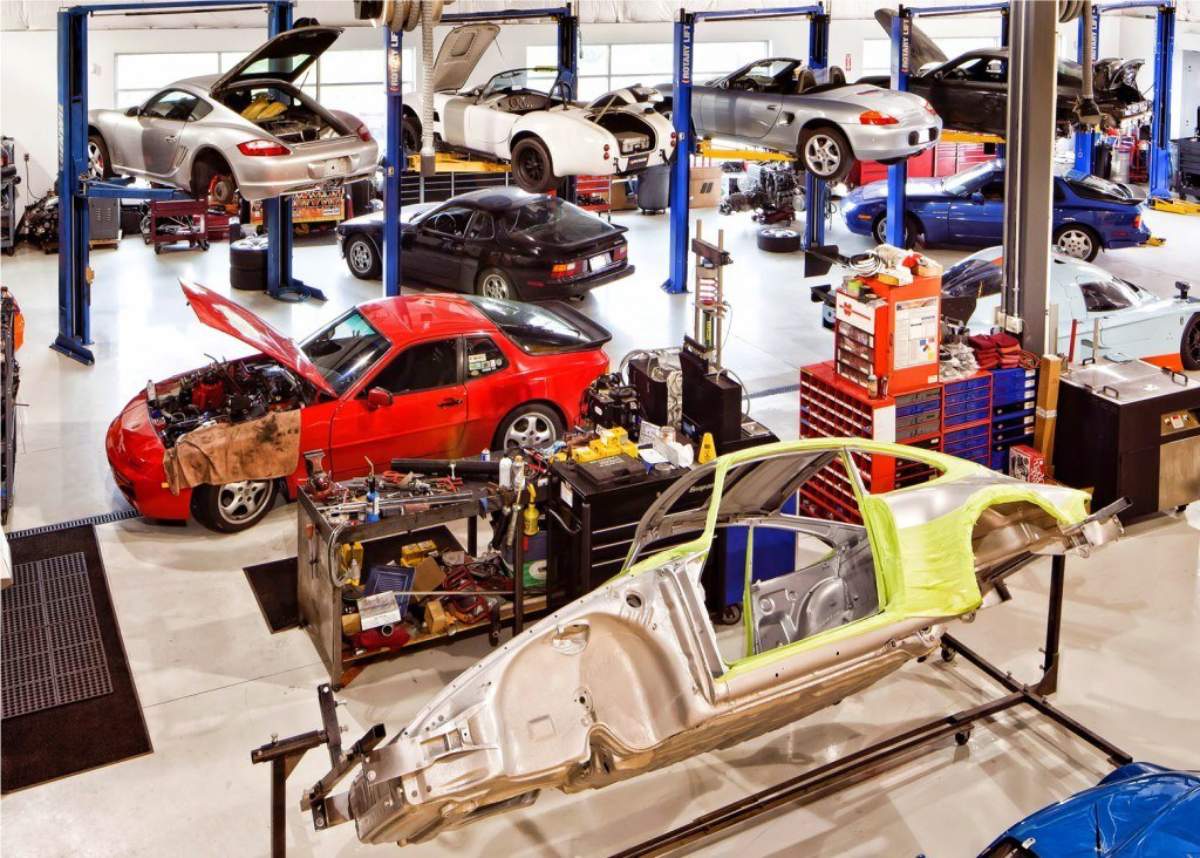
What affects auto repair shop insurance cost?
Auto repair shop insurance is priced around risk. The more exposure your business has, the more you may pay.
Common factors include:
- Business location and state
- Shop size and square footage
- Annual revenue and payroll
- Number of employees
- Years in business
- Services offered
- Body work, performance work, towing, diagnostics, or mobile repair
- Number and value of customer vehicles on-site
- Overnight vehicle storage
- Tools, lifts, diagnostic equipment, and property value
- Business-owned vehicles
- Employee driver records
- Prior claims history
- Coverage limits and deductibles
- Security systems, cameras, gates, alarms, and fire protection
A small one-bay repair shop with no employees will usually pay less than a full-service shop with multiple technicians, expensive equipment, business vehicles, and customer cars stored overnight.
How shop type changes your insurance cost
Not every auto business has the same risk profile. The type of shop you operate can change both the policies you need and how much you pay.
| Business type | Main insurance cost drivers | Why cost may be higher or lower |
|---|---|---|
| General repair shop | General liability, BOP, garagekeepers, workers’ comp | Moderate baseline risk if services are standard and vehicles are not stored long-term |
| Body shop | Property, equipment, paint, chemicals, garagekeepers | Often higher because of expensive equipment, paint exposure, and customer vehicle values |
| Mobile mechanic | Commercial auto, tools, HNOA, general liability | May have lower property cost but higher driving and off-site tool exposure |
| Tire shop | Customer volume, equipment, employee injury risk | High customer traffic and repetitive lifting can affect liability and workers’ comp |
| Oil-change shop | High transaction volume, slip-and-fall risk, service-error claims | Fast service model can create frequent customer-contact and workmanship exposure |
| Performance shop | High-value vehicles, test drives, specialized work, E&O risk | Higher because vehicles may be expensive and modifications can increase dispute risk |
| Towing business | Commercial auto, on-hook coverage, driver risk | Often higher due to road exposure, towing operations, and vehicle transport risk |
| Detail shop | Garagekeepers, property, chemical exposure, customer-vehicle care | Cost depends heavily on customer vehicle value and whether cars are stored on-site |
If your shop handles expensive vehicles, stores cars overnight, offers towing, or performs specialty work, expect insurers to ask more detailed questions before quoting.
How to lower auto repair shop insurance premiums without creating gaps
The goal is not to buy the cheapest policy. The goal is to reduce unnecessary cost while keeping the coverage that protects your shop after a claim.
- Compare quotes from multiple carriers. Insurance companies price auto repair shops differently.
- Bundle coverage when it makes sense. A BOP can be cheaper than buying general liability and commercial property separately.
- Improve shop safety. Fire suppression, cameras, fenced lots, locked key storage, clean floors, and employee training can help reduce risk.
- Reduce customer-vehicle exposure. Limit overnight storage when possible and use documented intake forms, key controls, and surveillance.
- Keep clean records. Document repair authorizations, customer approvals, inspections, test drives, and completed work.
- Review deductibles carefully. A higher deductible can lower your premium, but only choose one your shop can afford after a loss.
- Re-shop before renewal. Payroll, revenue, vehicles, employees, and services can change, so review coverage at least once a year.
What to ask before buying auto repair shop insurance
Before you buy a policy, ask questions that match your actual shop operations.
Ask:
- Does this policy cover customer vehicles in my care?
- Do I need garagekeepers, garage liability, or both?
- Are test drives covered?
- Are employee drivers covered?
- Are business-owned vehicles covered?
- Do I need hired and non-owned auto coverage?
- Are tools, lifts, scanners, and equipment covered at replacement cost or actual cash value?
- Are theft, fire, vandalism, weather, and business interruption included?
- Are mobile repair, towing, performance work, body work, or specialty services covered?
- What exclusions should I know about?
- How are claims handled when a customer vehicle is damaged?
If the agent cannot clearly explain the difference between general liability and garagekeepers coverage, keep asking questions before you buy. If you want a broader look at claim timing, it also helps to review how long does it take for a car insurance claim.
Get an auto repair shop insurance quote
Online averages are helpful, but your real cost depends on your business details. A quote for an auto repair shop should consider your location, services, employees, payroll, revenue, equipment, customer vehicles, business vehicles, and claims history.
For the most useful quote, be ready to provide your business ZIP code, shop type, services offered, number of employees, annual payroll, annual revenue, years in business, customer vehicles stored overnight, maximum customer vehicle value on-site, business-owned vehicles, tools and equipment value, prior claims, and coverage types you want reviewed.
Use the Life My Savings quote form to compare options and identify the coverage stack that fits your shop.
FAQ
How much is business insurance for a mechanic shop?
On average, a small to mid-sized auto repair shop can expect to pay between $1,200 and $5,000+ per year for standard business insurance. Your exact premium will depend heavily on your shop’s location, annual revenue, payroll size, and the number of vehicles you keep on your lot at any given time.
What insurance does an auto repair shop need?
To fully protect your business, a standard auto repair shop typically needs these four core policies:
- Garage Liability: Covers third-party bodily injuries and property damage resulting from your daily operations.
- Garagekeepers Insurance: Specifically protects your customers’ vehicles from damage, theft, or fire while they are in your care, custody, or control.
- Workers’ Compensation: Mandatory in most states if you have employees; covers medical bills and lost wages if a mechanic gets injured on the job.
- Commercial Property & Tools: Protects your physical building, expensive diagnostic equipment, lifts, and hand tools from theft or covered disasters.
Auto repair shop insurance is not one policy. It is a coverage stack built around your real business risks. A small shop may start with general liability and a BOP, but many repair businesses also need garagekeepers coverage, workers’ compensation, commercial auto, and other protection.
The cheapest policy may look attractive until a customer vehicle is damaged, an employee is injured, or a fire shuts down the shop. The smarter goal is to buy coverage that fits your shop’s size, services, vehicles, employees, and financial risk.
>>> Related Guides
- Review can you get gap insurance on a used car
- Learn what happens if you don’t pay car insurance
- See whether should I get rental car insurance
William James is a personal finance and insurance writer who focuses on auto insurance, car ownership costs, and consumer-friendly coverage guides. He specializes in breaking down complex insurance topics—such as policy requirements, claims, high-risk driver coverage, and premium pricing—into clear, practical advice for everyday drivers. His work is designed to help readers compare options, understand state-specific rules, and make more confident financial decisions. At Life My Savings, William writes research-backed content aimed at making insurance and money topics easier to understand.