
Applying for Government Grants is one of the necessary conditions for you to receive subsidy packages from support programs for individuals and businesses. However, not everyone knows the regulations and procedures to optimize the successful application process. Find out more useful information about government assistance programs and detailed instructions on how to apply for the most complete subsidy below.
Key Takeaways
- Government assistance programs are designed to address basic needs, providing significant financial, health, and community stability benefits.
- Understanding eligibility criteria is fundamental in successful applications for programs like SNAP, Medicaid, and Section 8 housing.
- Preparation, accurate documentation, and proactive communication with agencies streamline the application process.
- Additional resources and support organizations are invaluable, offering guidance and increasing the likelihood of accessing necessary benefits.
- Online resources play a crucial role in efficiently navigating the various programs and their specific requirements.
Government Assistance Programs
Government assistance programs are designed with the primary aim of helping individuals and families meet their fundamental needs. These include necessities like food, housing, healthcare, and financial support. SNAP is one of the most prominent programs, providing food benefits to qualifying households. To ensure the benefits reach those in genuine need, applicants must satisfy specific income and resource criteria. For instance, in 2024, eligibility for a single-person household requires not exceeding a gross monthly income of $1,632 or a net monthly income of $1,255.
Besides food support, other integral programs, like Temporary Assistance for Needy Families (TANF) and Medicaid, offer further aid. Each of these is targeted at varying needs, ensuring comprehensive coverage of various aspects of living essential for economic stability and health. While applying might seem challenging, exploring these programs can ease financial pressures, making essential living costs more manageable.
The Benefits of Applying for Government Assistance
Applying for government assistance comes with an array of life-changing benefits. Financial Relief is arguably the most immediate and significant advantage. It alleviates the stress of meeting life’s basic requirements from putting food on the table to ensuring a safe place to live. For families facing unemployment or underemployment, these programs can offer a financial cushion that can make the difference between stability and poverty.
Moreover, receiving government support can open doors to educational opportunities and better health services. Accessing health programs like Medicaid not only lowers medical costs but also opens paths to regular healthcare checkups, preventive services, and emergency care. This attention to health can lead to reduced illness rates over time, pointing to a societal benefit of a healthier community.
Another often overlooked benefit is the positive impact on mental health. Financial instability can lead to a significant amount of stress, affecting both mental and physical health. Government assistance applications provide a sense of security, knowing that support systems are in place. This security can boost mental health, providing relief and allowing individuals to focus on longer-term goals rather than short-term survival.
Furthermore, these programs foster community cohesion. By ensuring that the vulnerable in society have access to basic needs, they create a more inclusive society where everyone has the opportunity to thrive, reducing instances of crime and mistrust that often arise from inequality.
Government Assistance Programs Available
Numerous government assistance programs cater to different needs and circumstances. SNAP, for instance, provides monthly benefits to purchase food, ensuring nutritional needs are met regardless of income instability. These benefits are delivered through an Electronic Benefits Transfer (EBT) card, a discreet, efficient way to access sustenance.
Section 8 Housing Vouchers offers another vital form of relief. Designed to make private housing more affordable for individuals and families, this program partners with landlords to cover rental costs, allowing families to live in safer neighborhoods with better opportunities for advancement.
Further, programs such as Medicaid ensure everyone has access to healthcare, irrespective of their economic status. This program is especially vital for individuals with chronic illnesses or disabilities who might otherwise forgo necessary medical attention due to financial constraints.
Exploring the variety of assistance programs can also reveal gems like Unemployment Insurance, aiding those who have recently lost jobs, and VA Benefits, supporting veterans through various life stages. These are just a few illustrations of how government assistance can make life more manageable, offering support where and when it’s most needed.
Eligibility Requirements to Apply for Benefits
Understanding the eligibility requirements for government assistance is crucial. Programs such as SNAP require applicants to fall under specific income limits, usually aligned with the federal poverty line. For instance, net and gross income thresholds must not exceed a set percentage, generally around 130 percent of the federal poverty level.
Eligibility isn’t confined to income alone. Residency status, household size, and expenses also play significant roles. Citizenship or approved immigration status is necessary, with specific exceptions for certain non-citizens, including those receiving disability assistance or children under 18.
Moreover, different programs may impose additional criteria. For Medicaid, income requirements are often stricter, targeting low-income adults, children, pregnant women, and individuals with disabilities. It’s also noteworthy that some programs, like veterans’ benefits or those for the elderly, cater to specific population slivers, thus requiring distinct qualification criteria.
Applicants must prepare to furnish necessary documentation to validate their eligibility, including identity proof, residency, and income verification. The precise requirements can vary by state and program, so it’s imperative to check state-specific guidelines regularly.
How to Apply for Benefits
When looking to apply for government assistance, understanding the process is vital. Different programs have distinct application methods, often managed at the state level to accommodate local needs and resources. Notably, submitting applications online has become increasingly common, streamlining the process and making it more accessible.
For those with limited internet access or preferring face-to-face guidance, visiting local agency offices offers personalized assistance. Ensuring all required documentation is in order before beginning the application can expedite the process significantly. Common documents include proof of income, identification, and residency verification.
Starting with USAGov’s Benefit Finder Tool can help applicants navigate the numerous programs available, tailoring searches based on individual needs and circumstances.
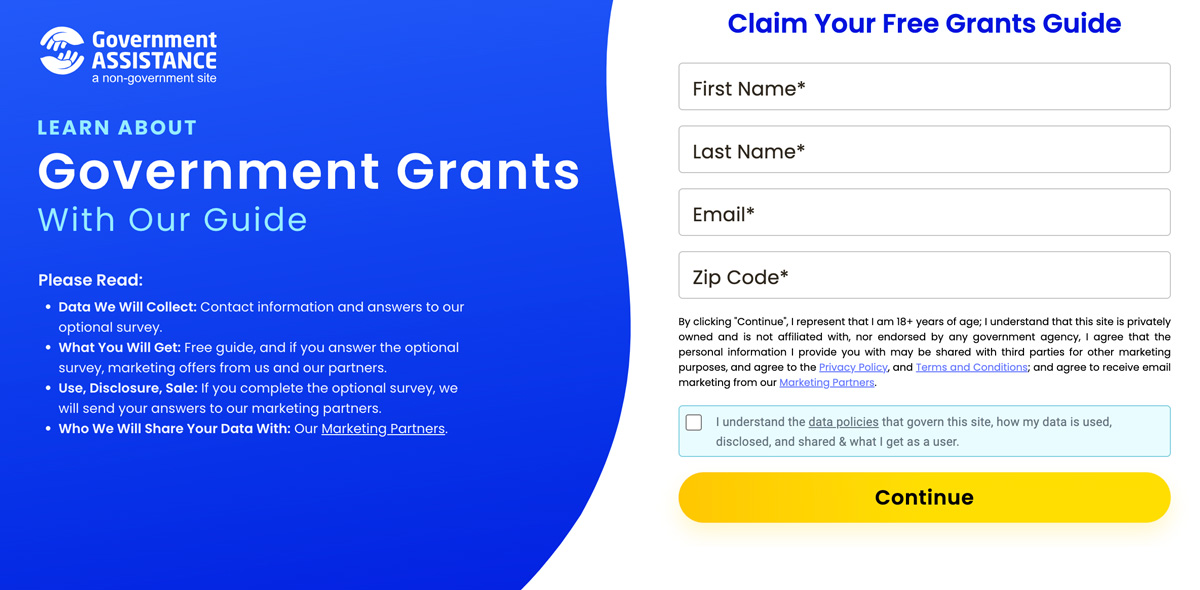
Discover Government Grants. Get Our Free Guide!
- Information We Collect: Your contact details and responses to an optional survey.
- What You’ll Receive: A free guide, plus exclusive marketing offers from us and our partners if you complete the survey.
- How We Use Your Data: Should you complete the survey, your responses may be shared with our marketing partners.
- Who We’ll Share With: Our trusted marketing partners.
Let me know if you’d like any other adjustments!
Simple Application Process
Streamlining the application process for government benefits starts with a clear understanding of specific program requirements. Typically, applications are submitted through state agencies, either online or via traditional methods like mail or in-person visits, depending on state policies.
Applicants should gather necessary information beforehand to manage expectations and reduce processing delays. This includes personal identification, income data, and documents reflecting household expenses.
Upon submission, applicants may undergo interviews usually over the phone in today’s digital age to verify the details provided. This step is crucial to ensuring the benefits are awarded to those most in need, maintaining the integrity of these critical programs.
Many states provide online portals where applicants can check the status of their applications. These digital avenues not only reduce the waiting time but also keep applicants informed of any additional requirements or steps needed to proceed.
Documents Needed When Applying
When preparing to apply for government programs like SNAP, having the correct documentation ready is essential. These documents validate your eligibility and ensure the accuracy of the information provided, streamlining the approval process.
Identity Verification typically requires a driver’s license, state ID, or a U.S. passport. Proof of citizenship or immigration status might include a birth certificate or a green card, crucial for non-citizens. Income verification is needed, usually through pay stubs or tax returns, to substantiate claims about income levels.
Residency should be verified through documents like utility bills or lease agreements. These confirm your location and eligibility within a specific state or municipality. Additionally, Social Security Numbers (SSNs) for all household members applying for benefits are necessary.
Beyond this, information around monthly expenses such as rent, childcare, and medical expenses provides a holistic view of financial needs, potentially qualifying applicants for additional support or benefits.
How to Search for Benefit Information
Unraveling the complex web of government assistance programs can be overwhelming, but with the right resources, navigating this landscape becomes manageable. The USAGov website is a trusted starting point for exploring the myriad programs available from food to healthcare and housing.
By utilizing tools like the Benefits Finder, applicants can specify personal circumstances and receive a tailored list of possible programs, simplifying the search. Such customization ensures no opportunities for assistance are overlooked.
Exploring comprehensive guides like the “50 States Public Assistance Guide” can also provide insights into state and local programs, elucidating the breadth of assistance available beyond federal options. Additionally, resources like Grants.gov can be invaluable for organizations seeking opportunities to support community-based initiatives, backdropping the personal application process with organizational potential.
Steps to Take
When embarking on the journey to apply for government assistance, clearly understanding each step simplifies the process. It’s crucial to identify the specific assistance programs that match your needs and verify your eligibility. By gathering all necessary documents and being prepared ahead of time, you can ensure a smoother application process.
Following the submission, regular check-ins through online portals or direct communication with agency representatives will keep you informed and ensure responses to any additional information requests. This continued engagement is key to avoiding common pitfalls in the application procedure.
How to Fill Out Assistance Program Applications
Filling out an application for government assistance requires attention to detail and precision. It’s imperative to read each section carefully, ensuring that all information provided is accurate and complete. Simple errors can lead to delays in processing or even denial of benefits.
When completing applications online, take advantage of built-in error-checking systems. Many state websites provide alerts for incomplete fields or inconsistencies, guiding you towards successful submission. If paper applications are necessary, double-check for any missing documents or signatures that could hold back processing.
Applicants should also be aware of submission deadlines and follow proposed timelines closely. Being organized and methodical in filling out applications demonstrates responsibility and commitment, potentially speeding up approval processes.
Checking Application Status
After submitting an application for benefits, waiting for a response can be nerve-wracking. However, checking the status can provide peace of mind and ensures you stay updated on progress. Most programs have online portals for status tracking, which provide an efficient way to stay informed.
When these aren’t available, phone contact with the agency is an alternative. Have all required information, such as your application number, on hand to speed up communications. A prepared approach not only saves time but also helps maintain accuracy in interactions with agency staff.
If a delay occurs or the response isn’t what you expected, it’s essential to follow up with the agency. Keeping records of all communication, including any reference numbers, can facilitate quick resolution of issues, ensuring that any snag in the process doesn’t halt progress towards accessing needed benefits.
How to Receive Notification Results
Understanding how and when you will receive your application results is critical for planning. Many agencies communicate decisions through various channels like mail, email, or phone calls; knowing which to expect can prevent missed communications.
Being proactive by providing accurate contact information on your application ensures timely delivery of results. It is also wise to routinely check the method through which you’ll receive updates to avoid any potential miscommunications or delays.
Moreover, some programs might request an in-person interview or phone call to deliver final decisions, using them as opportunities for clarification and answering any remaining questions. This approach reflects transparency and ensures both parties are on the same page regarding the benefit distribution.
Seeking Additional Support
In cases where initial application attempts are unsuccessful or additional guidance is needed, consulting additional resources is advisable. Many organizations offer support to applicants through the process, providing invaluable assistance and clarifications. Often, these entities have insights or experience that can ease frustrations and make the path to receiving aid clearer.
Support Organizations and Resources
Various organizations and resources are dedicated to assisting individuals through the application process for government aid. Community Action Agencies can provide personal assistance with applications and offer insights into the variety of benefits available.
Local non-profits often have programs designed to support individuals in need, with services ranging from guiding them through paperwork to advocating on their behalf. Collaborating with these groups can boost the likelihood of a successful application and ensure all potential benefits are explored.
Additionally, online resources like Benefits.gov are comprehensive tools for finding and understanding available aid. This platform also supports inquiries into new assistance ventures or legislative updates, equipping applicants with the information necessary to optimize their options.
Contact Channels for Assistance
Successful navigation of government programs often involves using multiple contact channels. The USAGov website is an excellent starting point, offering comprehensive directories of programs and contacts for both federal and state levels.
Reaching out directly to state social service agencies provides localized support tailored to specific community needs. These contacts can be invaluable for receiving up-to-date information on programs and understanding eligibility criteria.
Moreover, toll-free hotlines and online chats often available through government websites enable direct communication with knowledgeable representatives, ready to address inquiries and provide personalized guidance throughout the application process.
As you embark on the process to apply for government assistance, it’s vital to approach the task with diligence and clarity. Ensure thorough preparation by having all necessary documents at hand, understanding program-specific requirements, and maintaining honest communication with relevant agencies. Keep track of every step and correspondence to improve your advocacy and streamline the process toward securing essential benefits.
FAQs
- What are the basic eligibility criteria for government assistance programs?
- Criteria generally include household income levels, residency, citizenship status, and household size. Each program may have specific additional requirements.
- Can I apply online for all assistance programs?
- While many states allow for online submissions, certain programs may still require in-person or mailed applications. Check with your state agency for specific guidelines.
- What can cause a delay in the application process?
- Incomplete forms, incorrect information, or missing documentation can lead to delays, necessitating additional verification steps.
- How long does it take to receive benefits once approved?
- It typically takes about 30 days from application submission to receive a decision, though this can vary by program and state.
- Are there language assistance resources available for non-English speakers?
- Yes, many agencies offer bilingual support or translation services to help applicants fully understand and complete their applications.
In summary, applying for government assistance can be a pivotal step towards achieving financial stability and improved well-being. These programs function as crucial bolsters against economic hardship, ensuring food security, housing stability, and healthcare access. By navigating the application process with informed steps, comprehensive preparation, and utilizing supporting organizations and resources, applicants can effectively secure the benefits they deserve. These programs, imbued with the spirit of community support and upliftment, are vital in fostering a society where everyone has a chance to thrive. In the end, understanding and utilizing these resources can lay the groundwork for a brighter, more secure future.

William James is a personal finance and insurance writer who focuses on auto insurance, car ownership costs, and consumer-friendly coverage guides. He specializes in breaking down complex insurance topics—such as policy requirements, claims, high-risk driver coverage, and premium pricing—into clear, practical advice for everyday drivers. His work is designed to help readers compare options, understand state-specific rules, and make more confident financial decisions. At Life My Savings, William writes research-backed content aimed at making insurance and money topics easier to understand.