
The search query does auto insurance cover dui accidents is the first thing many people type after a crash, but the simple answer won’t help you—coverage depends on the specific policy, the state law that applies, and the exact circumstances of the incident; scroll down for a clear, state-aware breakdown of what typically pays, what insurers often deny, and how a DUI really affects your premiums and legal exposure. Life My Savings will guide you through the maze of insurance rules, helping you see clearly what coverage you can expect, what insurers usually refuse, and how a DUI reshapes not just your premiums but your financial future.
Does Auto Insurance Cover DUI Accidents?
In many cases, yes — if your policy is active, your liability coverage will generally still pay for the injuries and property damage you cause to others. But relying on a simple “yes” is dangerously misleading.
A DUI is never “covered” in the everyday sense of the word, and assuming your policy will fully protect you is a costly mistake. Behind the scenes, insurance companies frequently rely on strict contract exclusions to deny claims—often leaving you 100% out-of-pocket for the damage to your own vehicle. Furthermore, auto insurance will never erase your criminal penalties, pay your court fines, or fund your legal defense.
Ultimately, will car insurance cover a dui accident you were involved in depends on the hidden fine print of your contract and your state’s specific laws. Scroll down as we break down exactly which claims your insurer is legally required to pay, the specific clauses they use to deny your own vehicle damage, and the severe financial consequences — like massive rate hikes and SR-22 filings — that you need to prepare for right now.
If you need help comparing options after a DUI, use the short form on this page to get guidance from a licensed agent — including SR-22 and FR-44 filing assistance — before you overpay for the wrong policy.
Get Help Comparing Auto Insurance After a DUI Need SR-22 or FR-44 filing help, a better rate after a rate jump, or a second opinion on your current policy? Fill out the short form and a licensed agent will review your options within 24 hours.
The Real Consequences of a DUI on Your Auto Insurance
A DUI (Driving Under the Influence) conviction is one of the most consequential events that can happen to your driving record — and your insurance policy feels the impact just as hard as your license does. If you are wondering whether will car insurance cover a dui accident you were involved in, it is critical to understand that the type of coverage you carry, the state you live in, and how your specific policy defines covered losses all play a major role in what actually gets paid out.
Insurance is built on the concept of risk. When you are convicted of a DUI, you move into one of the highest-risk categories on the road in the eyes of every carrier. That classification changes everything — from what claims may be paid to what you will pay going forward. The place to start is understanding two timelines that most drivers confuse.
Two Timelines: Your Driving Record vs. Your Insurance Look-Back Period
This is one of the most misunderstood aspects of DUI consequences, and conflating the two can lead to costly surprises.
On your DMV or criminal record: A DUI can remain on your official driving or criminal record for decades, or even permanently, depending on the state. In Texas and Florida, for example, a DUI conviction does not disappear from your criminal history. This record can affect employment background checks, professional licensing, security clearances, and other matters that extend far beyond the insurance world.
For insurance rating purposes — the “look-back period”: Insurance companies do not pull your full lifetime driving history when calculating your premium. Instead, they look back at a defined window — typically 3 to 5 years for most states, and up to 10 years in states like California — when deciding how to price your policy. This look-back window is what directly determines how much extra you pay each renewal period. Once your DUI ages out of that window, it generally stops affecting your rate, even if the conviction is still visible on your permanent record.
The practical implication: a driver in Texas may carry a DUI on their criminal record for life, yet see their insurance premium begin to normalize after 5 years because the insurer’s look-back period has elapsed. During the active window, however, insurers can use your DUI conviction to justify higher premiums or nonrenewal at each policy term’s end. If your situation may also lead to a reinstatement issue, it helps to review insurance after a DUI-related suspension before choosing your next policy.
Does Car Insurance Cover DUI Accidents? The Direct Answer
This is the most searched question on this topic, and the most accurate answer is: often yes for covered losses while the policy is active, but not always and not completely. Does car insurance cover DUI accidents? The reason people get confused is that a DUI affects both the immediate claim and the long-term future of the policy — and those are two separate conversations.
At the policy level, auto insurance is built around standard coverage buckets. According to the National Association of Insurance Commissioners (NAIC), liability coverage pays when you are legally responsible for injuring someone or damaging their property, and collision coverage helps repair or replace your vehicle after a crash if you purchased that coverage. That is why many DUI crashes can still fall under ordinary policy coverages, even though the DUI itself creates serious separate legal and underwriting consequences.
Will Auto Insurance Cover DUI Accidents If You’re at Fault?
If you caused a DUI accident, your liability coverage is the portion that matters most immediately. It covers bodily injury and property damage you cause to third parties — other drivers, passengers, pedestrians. Per NAIC consumer guidance, bodily injury liability and property damage liability are designed to pay for injuries and property damage you cause to others when you are at fault. So if you rear-end someone while impaired, your liability coverage may still respond up to your policy limits.
What liability coverage will not do is cover your own injuries or your vehicle damage — for that, you need collision coverage, MedPay, or PIP (discussed below). And even if you carry those coverages, the insurer will investigate the claim and may push back depending on your specific policy language. If you are also trying to plan next steps after the crash, it helps to understand how long a car insurance claim takes before settlement and payment.
Will Car Insurance Cover a DUI Accident If the Other Driver Was Drunk?
If you were hit by a drunk driver, your situation is more straightforward. The at-fault DUI driver’s liability insurance is responsible for your damages. If they are uninsured or underinsured, your own uninsured/underinsured motorist (UM/UIM) coverage steps in to cover your losses — and this is exactly why UM/UIM coverage is one of the most important protections any driver can carry, regardless of their own record.
What Parts of Your Policy May Still Pay After a DUI Crash
When readers search will auto insurance cover DUI accidents, they want to know which specific parts of their policy are still in play. Does car insurance cover a DUI crash differently depending on coverage type? Yes — significantly. Auto insurance is not a single product; it is a bundle of coverages, and each one behaves differently in a DUI scenario. Here is how each coverage layer may respond.
Liability Coverage
Liability insurance is the most critical piece of the answer after a DUI. According to the NAIC, bodily injury liability (BIL) and property damage liability (PDL) coverages are designed to pay for the injuries and property damage you cause to others when you are at fault. State Farm’s policy language states similarly that liability pays damages an insured becomes legally liable to pay because of bodily injury or property damage caused by an accident arising out of the use of the vehicle.
In practical terms: if you caused a DUI crash and injured another driver or damaged their vehicle, your liability coverage may still respond up to your policy limits. That does not mean the situation is harmless. According to the Insurance Information Institute (III), state-required minimums may not cover the costs of a serious accident — and if the injuries are severe and the claim exceeds your limits, you are personally responsible for the difference out of pocket.
Important: Liability coverage has limits. If your policy provides $50,000 per accident in bodily injury coverage and the other driver’s injuries generate $120,000 in medical costs, you personally owe the $70,000 difference — regardless of whether a claim was paid.
Collision Coverage
Collision coverage is what typically matters for your own vehicle after a crash. The NAIC describes collision coverage as paying for physical damage to your car after it collides with another car or object. Allstate similarly describes it as coverage that helps pay to repair or replace your vehicle after a collision — only if you bought it before the crash occurred. Drivers who carry liability-only insurance generally have no coverage for their own vehicle damage.
However — and this is a point many drivers don’t discover until they are filing a claim — many modern auto insurance policies now include explicit “illegal acts” or “commission of a crime” exclusions. If your policy contains this language, the insurer has a legitimate contractual basis to deny the collision payout for your own vehicle, even if a court would otherwise treat impaired driving as negligence rather than intentional harm. The outcome depends on the exact wording in your specific policy and your state’s insurance regulations.
Before assuming your collision coverage will pay after a DUI, read your policy’s exclusions section carefully or ask your agent directly whether your contract contains an illegal acts clause. Do not assume coverage applies without verification.
Comprehensive coverage applies to non-collision events like theft, fire, weather, and vandalism. A DUI accident is collision-related, so comprehensive does not apply here.
PIP or MedPay
In some states, Personal Injury Protection (PIP) or Medical Payments coverage (MedPay) may also apply after a DUI crash. According to III, MedPay can cover medical and funeral expenses regardless of fault, and PIP — required in no-fault states — can pay medical bills, lost wages, and related expenses for you and your passengers regardless of who caused the accident.
This matters because a DUI crash does not automatically eliminate every first-party medical benefit on your policy. State rules and policy wording still govern what applies, so drivers should review the exact coverages listed on their declarations page rather than assuming they have nothing left. In no-fault states like Michigan, Florida, New York, and New Jersey, PIP may still cover immediate medical costs even for the at-fault impaired driver.
Uninsured/Underinsured Motorist Coverage
If the drunk driver who hit you has no insurance or insufficient limits, your UM/UIM coverage is what protects you. According to III and State Farm, UM/UIM can help when the at-fault driver has no insurance or not enough insurance — and that is highly relevant in DUI crash scenarios, since impaired drivers are statistically more likely to be uninsured.
UM/UIM pays for your injuries, your passengers’ injuries, and in some states your vehicle damage. This is one of the most underutilized yet important coverages available, and it matters most when you are on the victim side of a DUI accident.
What Auto Insurance Usually Will Not Cover After a DUI
If someone asks whether will car insurance cover a dui accident fully, the honest answer is no — and understanding the exclusions is just as important as understanding what is covered. Insurance may pay some covered losses from the crash itself, but it does not protect you from every financial consequence that follows a DUI conviction.
Criminal Penalties and Legal Costs
Car insurance does not wipe away the legal consequences of impaired driving. According to NHTSA, drunk driving is a dangerous crime, and penalties can include license revocation, fines, and jail time — with a first-offense DUI potentially costing upwards of $10,000 in fines, legal fees, and administrative costs. Those are criminal and administrative penalties, not accident coverages. Your auto policy will not pay your DUI fine, your defense attorney, your license reinstatement fee, or your court costs under any circumstances.
Losses Above Your Policy Limits
Your policy has limits. If the injuries you cause are severe and the claim exceeds your liability caps, you personally owe the balance — even when a claim is technically “covered.” III warns explicitly that state-required minimums are often not enough for serious accidents. A DUI crash with major injuries can leave you facing a very large personal liability even after the insurer pays its share.
“Full Coverage” Is Not a Magic Term
One of the most common misconceptions in auto insurance is treating “full coverage” as a guarantee that everything gets paid. It is not a legally defined term, and even broad policies still carry deductibles, coverage limits, and specific contract conditions. Even drivers who believe they have strong coverage may discover that their own vehicle’s damage is denied under an illegal acts exclusion, that punitive damages are excluded, or that certain drivers on the vehicle are excluded from coverage. III cautions that the term “full coverage” can be misleading — always review the actual declarations page and exclusions section.
Additional items your policy will typically exclude after a DUI:
- Punitive damages — if a court awards punitive damages against you for a DUI-related injury, most policies explicitly exclude these. You pay them out of pocket.
- Policy nonrenewal — after a DUI, many insurers exercise their right not to renew your policy at the next term’s end, leaving you to find high-risk coverage on your own. Per Allstate, some insurers will not renew a policy after a DUI, especially those that do not write high-risk business.
Do Car Insurance Companies Cover DUI Accidents Differently by State?
One critical but often overlooked fact is that insurance regulation is state-level, which means the answer to “does car insurance cover DUI accidents” can genuinely vary depending on where you live. Do car insurance companies cover DUI accidents the same way in Texas as in New York? Not necessarily — and the differences matter.
No-fault states (including Michigan, Florida, New York, and New Jersey) require all drivers to file injury claims through their own PIP coverage first, regardless of fault. This can actually provide broader immediate medical coverage in some DUI scenarios. At-fault states follow traditional liability rules, where the at-fault driver’s insurer pays. Additionally, states have different SR-22 and FR-44 requirements (covered in the next section), different look-back periods, and different rules on whether UMPD can be used for hit-and-run claims.
Always check your state’s department of insurance website or consult a licensed agent in your state before assuming your coverage works the way a general article describes.
How a DUI Affects Your Auto Insurance Rates
Even when some coverage does remain intact after a DUI crash, the long-term financial consequences of DUI auto insurance rates are severe. According to Forbes Advisor’s 2024 analysis, drivers with a DUI on their record pay an average of 74% more for auto insurance than those with a clean driving history. In some states, that increase exceeds 100%. Allstate notes that a DUI signals to insurers that a driver is high-risk, which can lead to loss of preferred rates, loss of discounts, higher deductibles, and restricted access to standard-market carriers.
Here is what to expect on your premium after a DUI conviction:
| Driver Profile | Average Annual Premium (National) |
| Clean driving record | $1,450 |
| One at-fault accident | $1,890 |
| One DUI conviction | $2,520 |
| DUI + SR-22 requirement | $2,800–$3,500+ |
(Figures are national averages based on 2024 industry data. Your actual rate depends on state, insurer, age, vehicle, and coverage level.)
Some insurers will not renew a DUI driver’s policy at all. In that case, you will need to shop specifically among carriers that accept high-risk drivers — and the rate differences between those carriers for the same profile can be as wide as $1,000–$2,000 per year. Drivers who are pushed out of the standard market may also want to compare high-risk auto insurance options before requesting quotes. According to State Farm, going three years without another violation can reduce premiums over time, and Allstate confirms that the longer you maintain a clean record after a DUI, the more likely your rates are to improve.
SR-22 vs. FR-44 After a DUI — Know the Difference
Most people researching “does auto insurance cover DUI accidents” quickly encounter a term they have never heard: SR-22. Understanding the difference between SR-22 and FR-44 matters significantly — because choosing the wrong filing can leave you non-compliant with state law even while paying for active insurance.
What an SR-22 Actually Is
An SR-22 is not a type of insurance policy. Allstate explains it as a state-filed document from your insurer proving you carry the required minimum liability coverage — and it is commonly required after serious violations including DUI. Most states require drivers to maintain an SR-22 for approximately 2 to 5 years without any coverage lapse. If the policy lapses for any reason, your insurer is legally required to notify the DMV, which can trigger an automatic license suspension.
A critical point that many drivers miss: not all insurers offer SR-22 filing. Allstate notes this explicitly. If your current carrier does not file SR-22 forms, it is not enough to simply shop for a lower premium — you need to specifically ask each potential carrier: “Will you insure me with a DUI on my record, and will you file an SR-22 in my state?” Make this your first screening question, not an afterthought after the quote is almost finalized.
If you do not own a vehicle but still need to maintain an SR-22 to keep your license valid, non-owner car insurance with SR-22 filing is an option worth asking about.
When FR-44 Applies (Florida and Virginia)
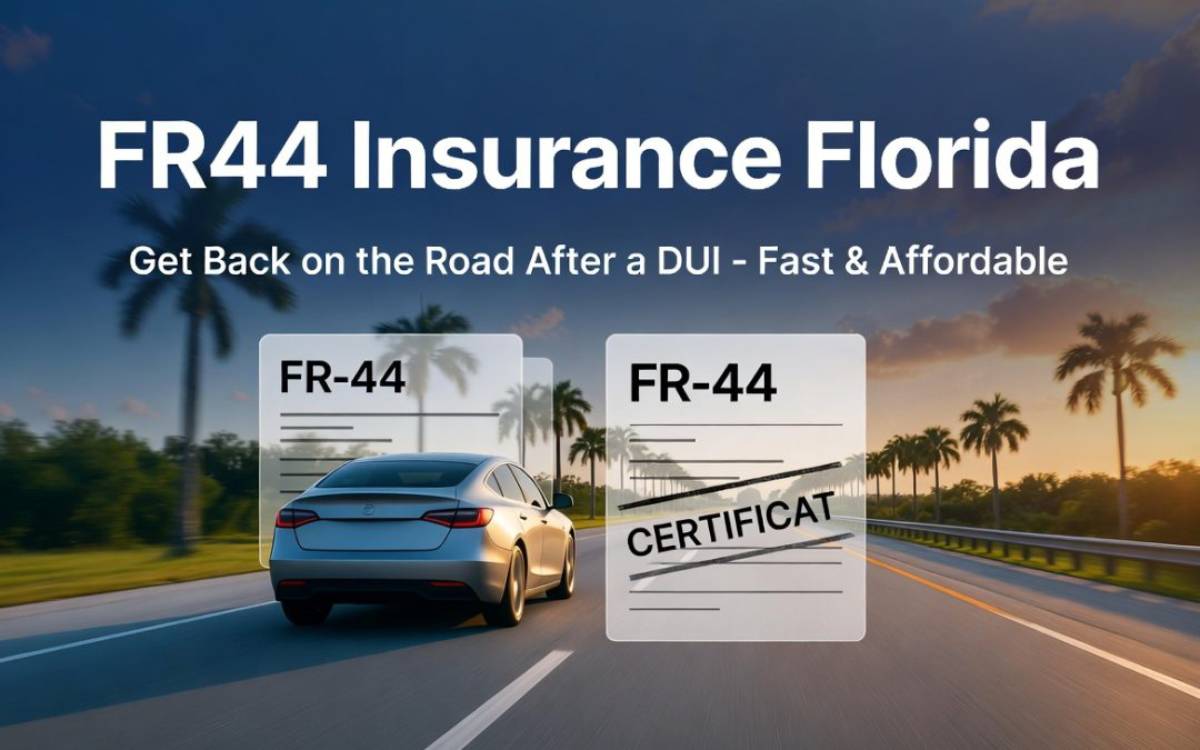
Drivers in Florida and Virginia face a stricter requirement after a DUI: the FR-44, which functions like an SR-22 but mandates significantly higher liability coverage limits.
According to the Virginia Department of Motor Vehicles, an FR-44 is required for DUI-related convictions in Virginia, with liability limits set at double the standard SR-22 minimums under Virginia law. According to the Florida Department of Highway Safety and Motor Vehicles, DUI convictions after October 1, 2007 require FR-44 coverage at a minimum of $100,000/$300,000 bodily injury / $50,000 property damage, or a combined single limit of $350,000 — and the filing must be maintained for three years from the date of license reinstatement.
State-Specific Alert — Florida and Virginia Drivers: If you live in either of these states, do not shop for SR-22 coverage after a DUI. Ask specifically for FR-44 filing capability. A carrier that only offers SR-22 cannot make you compliant. The coverage limits for FR-44 are substantially higher than SR-22 minimums, which means your premium will also be higher — but failing to meet this requirement keeps your license suspended.
The takeaway is simple: after a DUI, the cheapest quote is not always the best quote. You need a carrier that will write the policy, file the correct document for your state, and keep you compliant for the full required period.
How to Get Car Insurance After a DUI Without Overpaying
Here is the honest reality: affordable high-risk auto insurance exists, but finding it takes more deliberate effort than a standard policy search. Does car insurance cover DUI crash situations going forward? Yes — but you need to approach the next purchase strategically, because a bad quote can leave you both underinsured and still overcharged.
Start with two screening questions for every carrier you contact: “Will you insure me with a DUI on my record?” and “Will you file SR-22 or FR-44 in my state if required?” Allstate specifically notes that not all insurers offer these filings, so this must be the first step — not something you discover after a lengthy application.
Second, keep your policy active no matter what. SR-22 and FR-44 requirements come with strict continuous-coverage expectations, and any lapse — even one missed payment — can trigger a license suspension and restart your compliance clock in some states.
Third, do not strip your coverage down to the cheapest possible option without thinking through the consequences. III warns that state minimums may not be enough for a serious accident. NAIC notes that if you still owe money on your vehicle, your lender likely requires collision coverage. Saving money by removing important coverages can create a much larger financial problem if you are involved in another accident.
Fourth, consider telematics (usage-based insurance) programs. These track your actual driving behavior — speed, braking, nighttime driving — and some carriers will reduce your rate based on demonstrated safe driving, which can partially offset the DUI surcharge over time.
Tips to Lower Your Premium Over Time
Rebuilding after a DUI is a multi-year process. Some strategies that genuinely help: maintaining a spotless driving record from this point forward (each clean year helps meaningfully), completing a state-approved defensive driving course (some insurers offer a discount for this), bundling your auto policy with renters or homeowners insurance for multi-policy savings, re-shopping your coverage every 12 months as your DUI ages, and asking carriers about annual vs. monthly payment discounts.
Get a Free Quote — Find Out What You’ll Pay After a DUI
Don’t overpay for the coverage you need. Our licensed insurance advisors specialize in helping drivers with DUI convictions find real, affordable protection — including SR-22 and FR-44 filing in all 50 states.
The clearest way to understand how these rules work together is through real situations. Here are three common scenarios involving a DUI wreck and how insurance typically responds — including the nuances that are often glossed over.
Scenario 1: You drove drunk and rear-ended another vehicle. Your liability coverage may still pay for the other driver’s injuries and vehicle damage, up to your policy limits. If you carry collision coverage and your policy does not contain an illegal acts exclusion, your insurer may also cover your own vehicle damage. If you are trying to estimate the repair side of the claim, read our guide on how much insurance may pay for repairs. You will face a claim surcharge at renewal, and your carrier may choose not to renew the policy. You are personally responsible for any damages exceeding your limits, including any punitive damages a court may award.
Scenario 2: A drunk driver hit your parked car and fled the scene. Here is the critical nuance that many articles get wrong. The instinct is to file this as an uninsured motorist claim — but in approximately half of U.S. states, Uninsured Motorist Property Damage (UMPD) coverage cannot be used for a hit-and-run unless the at-fault driver is positively identified. If the driver is never found, many states treat the vehicle as “phantom” and require you to file under your own Collision coverage instead, subject to your deductible. In states that do allow UMPD for unidentified hit-and-run drivers, the coverage pays for vehicle damage. Because this rule varies sharply by state, always confirm your state’s specific UMPD rules with your agent before assuming which coverage applies.
Scenario 3: You were a passenger in a vehicle driven by a drunk driver who crashed. The drunk driver’s liability coverage typically covers your injuries as a passenger. If they lack adequate coverage or are uninsured, your own UM/UIM bodily injury coverage can fill the gap. You may also have a personal injury lawsuit against the driver. Your own auto rates should not be penalized since you were not operating a vehicle.
Frequently Asked Questions
These quick answers address the most common questions about liability coverage, SR-22 insurance, and DUI insurance rates.
Does auto insurance cover DUI accidents if I was the drunk driver?
A: Often yes for certain covered losses — your liability coverage may still pay for injuries and property damage you caused to others, and collision coverage may help with your own vehicle if you purchased it and your policy does not contain an illegal acts exclusion. However, the policy must be active, the loss must fit the contract, and you are still exposed to deductibles, limits, nonrenewal, and significant future rate increases.
Will my insurance pay for my own car after a DUI wreck?
A: Only if you carry collision coverage and your specific policy does not include an illegal acts or commission of a crime exclusion. Liability coverage pays for other people’s injuries and property damage only — not your own vehicle repair. Review your policy’s exclusions section or ask your agent directly before assuming collision will pay.
Does “full coverage” mean everything is paid after a DUI?
A: No. “Full coverage” is not a legally defined term. Even broad policies still carry deductibles, limits, and specific contract conditions. Punitive damages, criminal fines, attorney fees, and amounts above your policy limits are never covered. III cautions explicitly that this term can be misleading — always read the actual declarations page and exclusions.
Can my insurer drop me after a DUI?
A: Insurers generally cannot cancel mid-term without specific cause, but most can choose not to renew your policy when the current term expires. Allstate confirms that some carriers will not renew a DUI driver’s policy, particularly those that do not write high-risk business. You will receive a nonrenewal notice and must find a new insurer before your coverage lapses.
Do I need SR-22 after a DUI?
A: Most states require an SR-22 after a DUI for 2 to 5 years. It is not a separate insurance policy — it is a certificate your insurer files with the state DMV proving you carry minimum required liability. Note that Florida and Virginia require an FR-44 instead, which mandates significantly higher liability limits. Not all insurers offer these filings, so confirm SR-22 or FR-44 capability before binding a policy.
How long will a DUI affect my insurance rates?
A: This depends on two separate timelines that are commonly confused. A DUI can remain on your DMV or criminal record for decades — or permanently in states like Texas and Florida. However, insurance companies use a defined “look-back period” — typically 3 to 5 years for most states and up to 10 years in California — to price your premium. Once your DUI ages out of that look-back window, it generally stops affecting your rate even if the conviction remains on your criminal record.
What happens if a hit-and-run drunk driver damages my car and is never found?
A: It depends on your state’s rules. In approximately half of U.S. states, UMPD coverage cannot be used unless the at-fault driver is identified. If the driver is unknown, you may need to file under your own Collision coverage instead, subject to your deductible. Confirm your state’s specific rules with a licensed agent.
Conclusion: What You Should Do Right Now
So — does auto insurance cover DUI accidents? In many cases, yes for certain covered claims — especially third-party liability and sometimes your own vehicle damage if collision is in place and your policy permits it. But the more useful real-world answer is this: a DUI accident can still leave you with serious uncovered costs, major premium increases, SR-22 or FR-44 filing requirements, and fewer carrier options for years to come.
The smartest move right now is to speak with a licensed professional who understands high-risk coverage. Do not make coverage decisions based on the cheapest headline number you see online — the right policy for a DUI driver needs to cover your state’s filing requirement, carry adequate limits, and come from a carrier that will actually keep you on when renewal time comes.
Ready to Get Covered? Let Us Do the Work.
Our licensed agents work with drivers in all 50 states — including those who need SR-22 or FR-44 filing or are rebuilding their record after a DUI. Fill out the short form and a specialist will contact you within 24 hours with real options and honest rates. No judgment. No obligation. Just clear advice from people who know this market.
>>> Related Guides
- Compare insurance for unlicensed drivers
- Learn about car insurance with no credit history
- Review worst auto insurance companies 2026
William James is a personal finance and insurance writer who focuses on auto insurance, car ownership costs, and consumer-friendly coverage guides. He specializes in breaking down complex insurance topics—such as policy requirements, claims, high-risk driver coverage, and premium pricing—into clear, practical advice for everyday drivers. His work is designed to help readers compare options, understand state-specific rules, and make more confident financial decisions. At Life My Savings, William writes research-backed content aimed at making insurance and money topics easier to understand.